
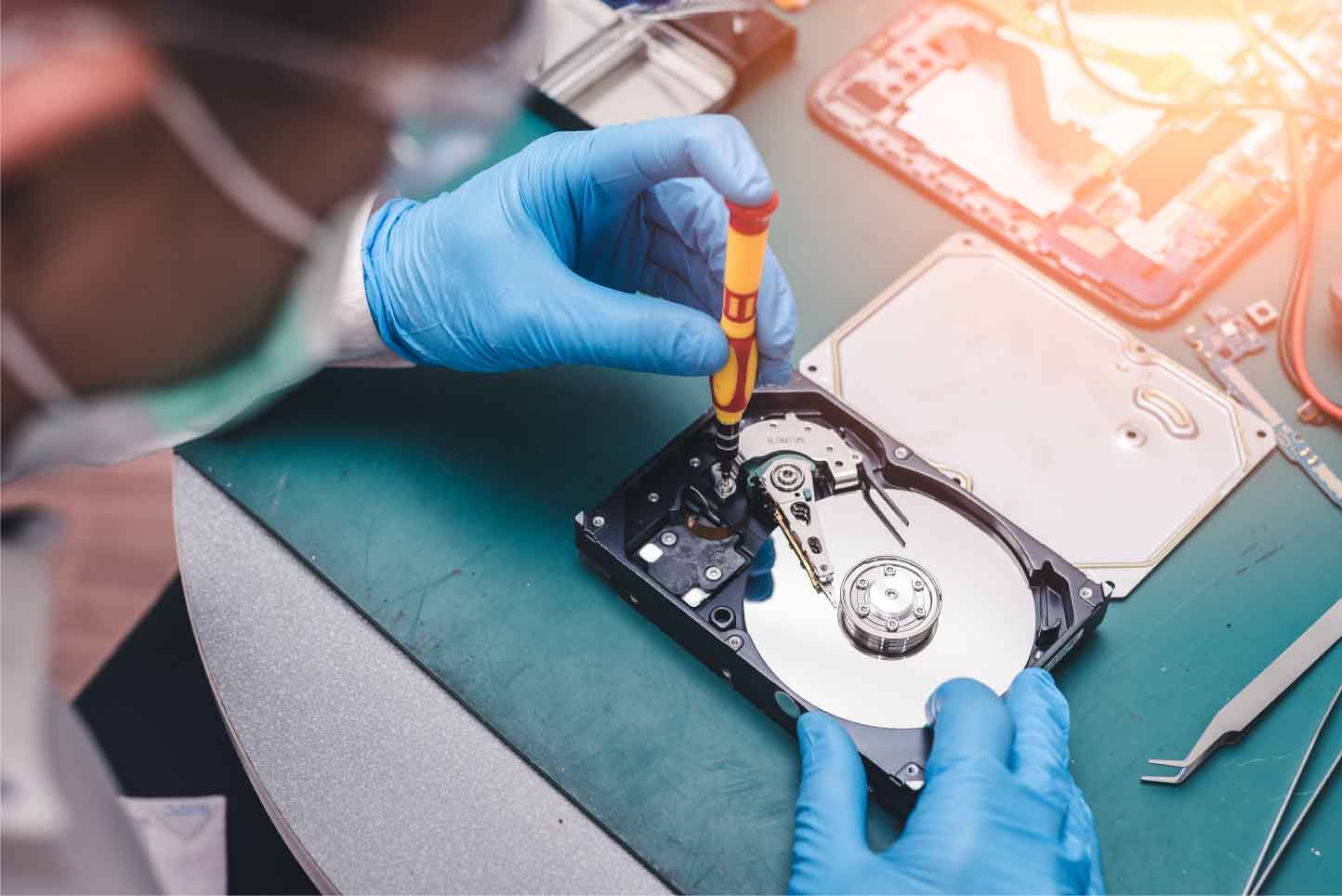


Hello tech enthusiasts! Today, we are going to delve deep into the intriguing world of data recovery and computer forensics. As technology progresses, these fields become increasingly critical. Whether it’s recovering crucial company data after a system crash or tracking down digital evidence for criminal investigations, professionals in this sphere are today’s unsung heroes.
What are Data Recovery and Computer Forensics?
Data recovery is the process of retrieving inaccessible, lost, corrupted, damaged, or formatted data from secondary storage, removable media, or files when the data stored in them cannot be accessed in a normal way.
On the other hand, computer forensics (also known as digital forensics) involves the identification, preservation, extraction, interpretation, and documentation of computer data for the purpose of finding digital evidence for court cases, or for preventing and tracking unauthorized data misuse.
Though data recovery and computer forensics may seem similar, they serve different objectives. Data recovery mainly concerns itself with restoring lost or damaged data, while computer forensics concentrates on investigating the nature of the data and tracking its digital footprint.
How Does Data Recovery Work?
Data recovery can take several forms, depending on the type of data loss. It may involve something as simple as replacing a damaged cable or something more complex like repairing a hard disk’s controller. Sometimes, a logical failure, such as a corrupt partition table or file system, requires software manipulation to read lost data.
For more severe physical failures, like a crashed hard disk drive or a damaged USB thumb drive, professional data recovery services may be necessary. They usually involve physical repairs to the damaged components in a cleanroom environment and cost considerably more than software recovery.
The Magic of Computer Forensics
Computer forensics, on the other hand, is a meticulous and method-driven process. It begins with the identification of the sources of digital evidence, followed by its preservation. It might include making an exact duplicate of the digital media, usually onto a write-blocking device to maintain the integrity of the data.
Extraction involves retrieving the preserved data, which can be a challenging task. This process often requires bypassing or cracking passwords, decrypting encrypted files, or even reconstructing damaged file systems.
Subsequent interpretation is based on the type of investigation. For example, finding evidence of unauthorized data breaches might involve scanning log files to see if any suspicious activity occurred. In criminal investigations, it might involve piecing together a person’s digital breadcrumbs to reconstruct their actions or motives.
The documentation process involves presenting collected evidence in a comprehensive, easy-to-understand manner. This often takes the form of a detailed written report, diagrams or timelines for court presentation.
Final Thoughts
Technology’s relentless advance has made data paramount in our lives. As a consequence, fields like data recovery and computer foreinsics bear more significance than ever before.
Data recovery assures us that, even in a worst-case scenario like a system crash or data corruption, we don’t necessarily lose all our valuable information. Computer forensics, on the other hand, is pivotal in maintaining online justice and safeguarding our digital world.
Regardless of whether you’re a tech professional looking to enhance your skillset or a curious reader intrigued by how data can be manipulated and interpreted, understanding these fields is certainly beneficial. At the crossroads of technology, security, and justice, data recovery and computer forensics indeed promise to make our digital tomorrow safer and more secure.

